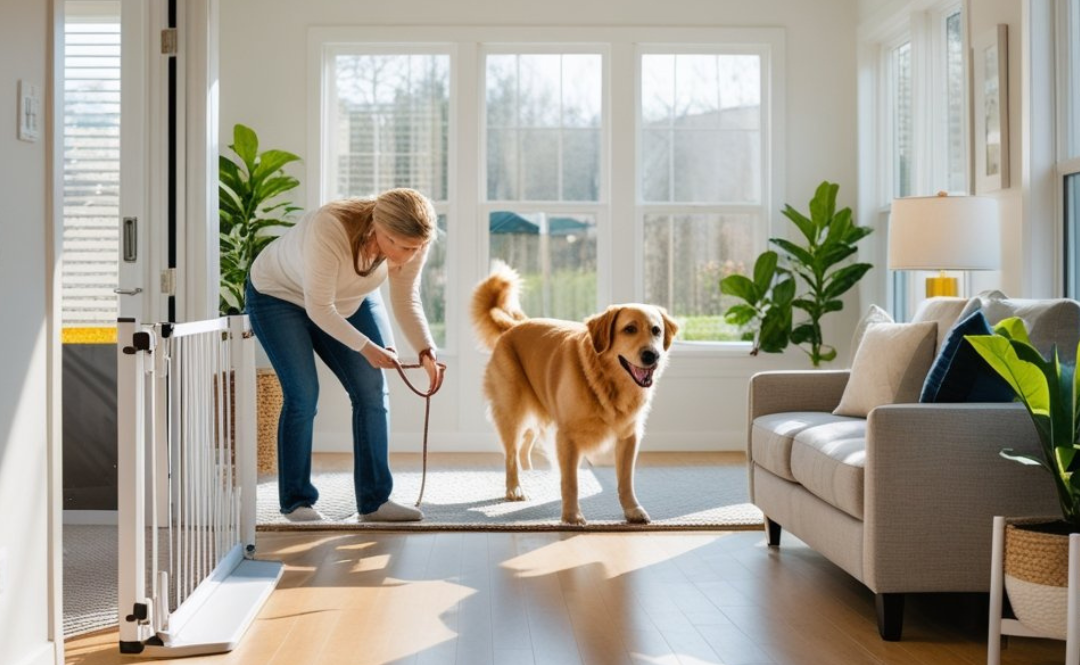
Bringing a dog into your home? Well, that means taking on the responsibility of keeping them safe from everyday household dangers.
Dog-proofing your home involves removing hazards, securing dangerous items, and creating protected spaces where your pup can explore without risk of injury or illness.
From electrical cords to toxic cleaning products, our homes contain many items that pose serious threats to curious dogs.
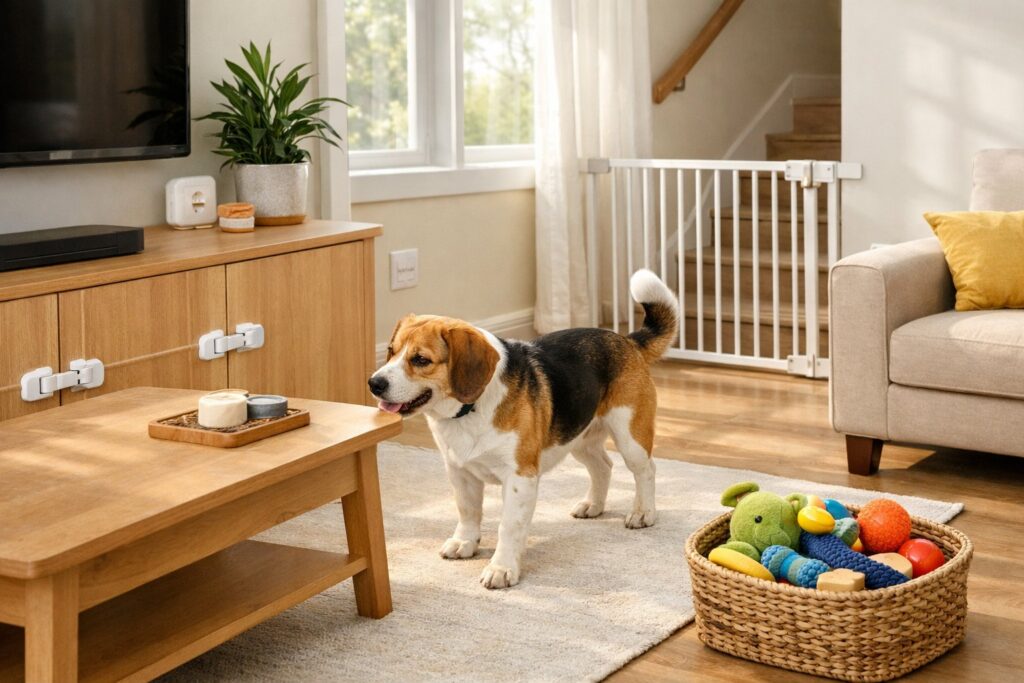
We get it—knowing where to start can feel overwhelming.
That’s why we’ve created this guide to walk you through each area of your home, both inside and out.
We’ll cover how to identify common dangers and what steps to take in high-risk rooms like kitchens and bathrooms.
Plus, we’ll talk about making your yard a safe place for your dog to play. Nobody wants a backyard mishap.
Creating a safe environment goes beyond just removing obvious hazards.
We’ll also show you how proper training and supervision work together with physical safety measures to protect your dog throughout their life.
Whether you’re prepping for a new puppy or making your home safer for an adult dog, these strategies will help you build a secure space where your pet can truly thrive.
At A Glance
Understanding the Importance of Dog-Proofing
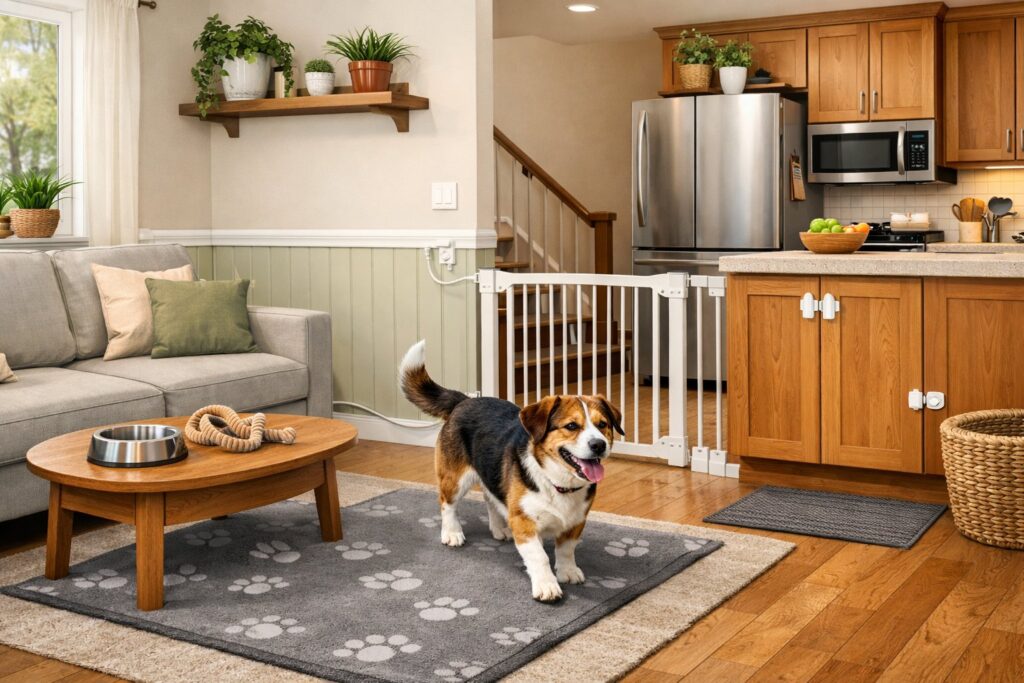
Dogs explore their world through their mouths and noses. That means everyday household items can quickly become dangers.
Creating a safe environment is just as important as providing proper nutrition and exercise for our dogs’ overall well-being. I’d argue maybe even more sometimes.
Why a Safe Environment Matters for Dogs
When we dog-proof our homes, we protect our pets from injuries, poisoning, and other preventable accidents.
Dogs don’t understand which items are dangerous, so they rely on us to remove hazards before problems occur.
A safe home reduces stress for both dogs and their owners.
We can relax knowing our dogs won’t get into trouble while we’re cooking dinner or taking a shower. That peace of mind? Priceless.
Dog-proofing prevents accidents and injuries that can lead to expensive vet visits.
More importantly, it protects our dogs from potentially life-threatening situations like electrical shocks, choking, or toxic poisoning.
Dogs who live in safe environments tend to be calmer and better behaved.
When we provide appropriate outlets for their natural behaviors and remove tempting dangers, our dogs can relax and feel secure in their homes.
Differences Between Puppy-Proofing and Dog-Proofing
Puppies require more extensive pet-proofing than adult dogs because they explore everything with their mouths.
They’re also smaller, which means they can squeeze into tighter spaces and reach items we might not expect. It’s honestly impressive what they find.
Puppy-proofing requires addressing hazards before your new pet arrives since puppies lack training and don’t understand boundaries yet.
Adult dogs may already know basic commands and house rules, but don’t let that lull you into a false sense of security.
Key differences include:
- Chewing intensity: Puppies chew constantly during teething, while adult dogs may have outgrown this behavior
- Training level: Adult dogs often respond to commands and understand off-limits areas
- Size considerations: Small puppies fit into spaces that adult dogs cannot access
- Supervision needs: Puppies require constant monitoring, while trained adult dogs can be left alone for short periods
However, we shouldn’t assume adult dogs are automatically safe.
Newly adopted dogs need time to adjust, and even well-trained dogs can get into trouble with the wrong items. Trust me, it happens.
Common Household Risks for Dogs
Our homes contain numerous hazards that can harm dogs.
Understanding these risks helps us prioritize which areas need attention when we dog-proof our homes.
Toxic substances top the list of dangers. Chocolate, grapes, onions, and products containing xylitol can poison dogs.
Cleaning products, medications, and antifreeze are particularly dangerous because small amounts can be fatal.
Choking hazards include small objects like coins, jewelry, hair ties, and children’s toys.
These items can block airways or cause intestinal blockages requiring emergency surgery. Not exactly what you want for your pup.
Electrical cords attract dogs who like to chew, leading to burns or electrocution.
Small objects and electrical wires represent some of the most overlooked dangers in our homes.
Other common risks include:
- Toxic houseplants like lilies and sago palms
- Open trash cans with food waste and packaging
- Unsecured furniture that can tip over
- Sharp objects left within reach
- Open toilet bowls containing cleaning chemicals
Human foods pose a significant threat.
We must store all food in sealed containers and keep counters clear of tempting items. It’s harder than it sounds, but worth it.
Creating Safe Living Spaces
We need to focus on the main areas where our dogs spend most of their time and establish clear boundaries that keep them protected.
Securing heavy furniture, setting up designated zones, and using gates strategically will prevent accidents and give our dogs freedom within safe limits.
Securing Living Rooms and Bedrooms
We should start by anchoring shelves, TVs, and bookshelves to nearby walls to prevent them from tipping over.
Dogs can knock into furniture while playing or exploring, which creates serious danger. You’d be surprised what a zooming pup can topple.
We need to tuck away electrical cords behind furniture or use protective cord covers.
Dogs often chew on wires, which can cause electric shocks or burns. Covering electrical outlets with childproof plugs adds another layer of protection.
We must tie up dangling blind cords and curtain pulls out of reach.
Dogs can become tangled or strangled in these hanging cords. Small items like coins, jewelry, and rubber bands should be kept off floors and low surfaces since they pose choking risks.
Establishing Designated Dog Areas and Boundaries
We should create specific zones where our dogs can move freely without accessing dangerous areas.
These safe spaces help us gradually introduce dogs to the entire home while maintaining control.
We need to provide comfortable bedding in our dog’s designated resting area. This gives them a secure spot to relax without disturbance.
We should also keep a water bowl with fresh water in this space so dogs never feel thirsty.
We can use nonslip rugs on slick flooring to prevent falls and injuries.
Hard surfaces like tile or hardwood can be slippery for dogs, especially puppies who are still learning to control their movements.
We must block small spaces between furniture where dogs could get stuck or trapped. Even the most careful pup can get wedged sometimes.
Using Pet Gates and Dog Gates Effectively
We can install dog gates to block stairs and keep dogs contained in safe areas.
Gates prevent access to kitchens where hot stoves and sharp objects create hazards, and they stop dogs from climbing stairs before they’re ready.
Key areas to gate:
- Staircases (top and bottom)
- Kitchen entrances
- Rooms with hazardous items
- Hallways leading to unsafe zones
We should choose gates that are tall enough and sturdy enough for our dog’s size and strength.
A pet gate needs to fit securely in doorways or between walls without gaps underneath or on the sides. We can gradually expand our dog’s access as they learn boundaries and become more trustworthy in new spaces.
Managing Hazards and Dangerous Items
Dogs explore the world with their mouths, which puts them at risk from everyday household items.
Keeping medications locked away, securing trash cans, removing toxic plants, and protecting electrical cords are essential steps to prevent poisoning, choking, and injuries.
Storing Medications, Chemicals, and Cleaning Supplies
We need to treat medications and chemicals like the dangerous substances they are.
Human medications can be fatal to dogs, even in small doses. Pain relievers, antidepressants, and supplements should always stay in locked cabinets or high shelves that dogs can’t reach.
Cleaning supplies pose similar risks.
Products like bleach, drain cleaners, and detergent pods can cause severe burns or poisoning if ingested. We should store these items in cabinets with child-proof locks, especially if our dogs have learned to open regular cabinet doors.
Antifreeze deserves special attention because it tastes sweet to dogs but is extremely toxic.
We must keep it in sealed containers in locked garages or sheds. The same applies to pest control products, fertilizers, and pool chemicals.
Dealing with Trash and Food Storage
Dogs view trash cans as treasure chests full of interesting smells.
Unfortunately, garbage contains dangerous items like razors, food wrappers, chicken bones, and spoiled food that can cause choking or illness. Not exactly the kind of adventure you want for your pup.
We should invest in trash cans with secure lids or store bins inside locked cabinets.
Metal cans with foot pedals work better than plastic ones that determined dogs can knock over or chew through.
Food storage requires similar attention.
Chocolate, grapes, onions, and xylitol (found in sugar-free products) are toxic to dogs. We must keep all food in sealed containers on high shelves or in pantries with secure doors.
Removing Toxic Plants and Choking Hazards
Did you know a lot of common houseplants are actually poisonous to dogs? Lilies, sago palms, tulips, and azaleas can cause anything from mild stomach upset to, well, full-on organ failure.
We really ought to identify every plant in our home and take a minute to check if it’s safe for dogs. It’s one of those things that’s easy to overlook until it’s too late.
Toxic plants should be moved to rooms where dogs aren’t allowed, or honestly, just given away to friends. If you’re set on keeping plants, there are dog-safe options like spider plants, Boston ferns, or African violets—those are pretty, right?
Small objects are another story—they’re classic choking risks. Coins, jewelry, hair ties, and children’s toys can all get lodged in a dog’s throat or intestines.
We’ve got to keep these things off floors and low surfaces, even if it feels like a losing battle some days.
Common choking hazards:
- Small toy parts and Legos
- Batteries and remote controls
- Socks and underwear
- Hair accessories and rubber bands
Protecting Electrical Cords and Outlets
Electrical cords are like magnets for curious puppies. They see them as chew toys, which is just… not great.
A dog biting through a live cord can end up with severe burns or, in the worst case, get electrocuted. It’s scary how quickly it can happen.
We can use cord protectors—those hard plastic sleeves—to cover exposed wires. They make it much harder for teeth to reach the dangerous bits.
Another trick is to route cords behind furniture or along baseboards. Just tuck them away where dogs can’t get at them.
Unplugging devices when we’re not using them removes the electrical current from cords. That’s a simple step, but it helps.
For cords we can’t hide, bitter-tasting sprays made for pets can really discourage chewing. (Not gonna lie, the smell is pretty bad, but it works.)
Electrical outlets at floor level need covers, especially if you’re using puppy pads during house training. Those plastic outlet covers for childproofing actually work great for dogs too.
Power strips should be inside cable management boxes or mounted up on walls, out of reach. Extension cords? Those are only for temporary use—don’t let them dangle where a dog can find them.
Safe Bathroom, Kitchen, and Utility Areas
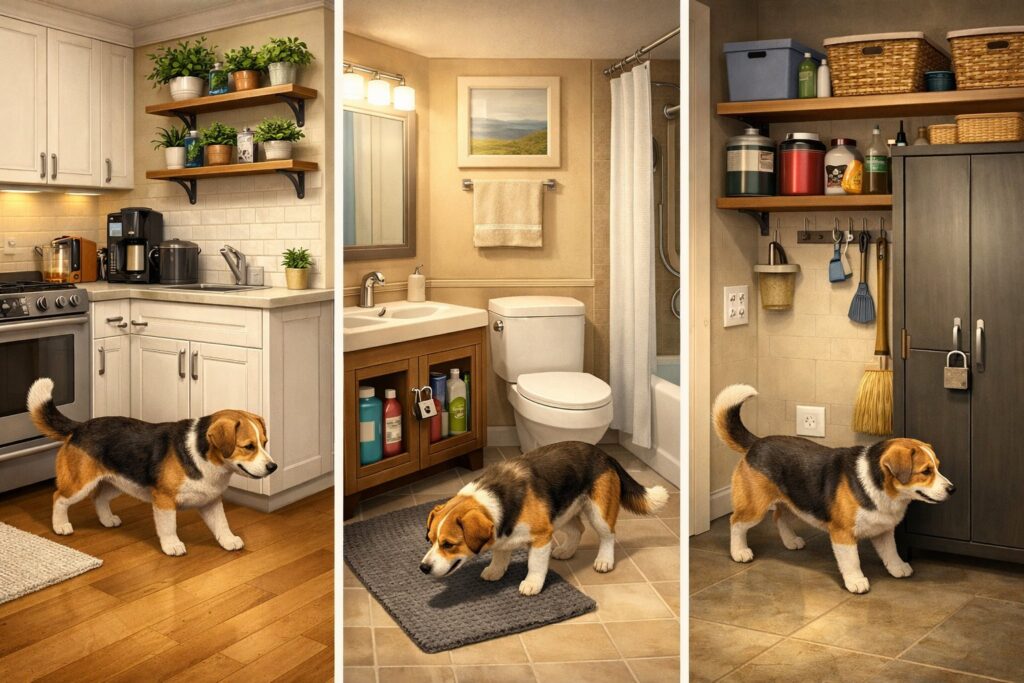
Bathrooms, kitchens, and utility spaces are honestly packed with the most hazardous items for dogs. These rooms definitely need extra attention to keep pets safe from poisoning, injuries, and all sorts of accidents.
Securing Bathrooms and Laundry Rooms
There are a bunch of dangers to think about when puppy-proofing bathrooms and laundry rooms. The toilet? Big risk if your dog drinks water that’s got cleaning chemicals in it.
Keep the toilet lid closed, always. Better yet, put a toilet lock on there if you’ve got a particularly persistent pup.
Store all medications, cosmetics, and toiletries up high in cabinets or drawers. Even toothpaste and mouthwash—stuff that seems harmless—can be toxic to dogs.
We recommend installing childproof latches on lower cabinets to keep clever dogs from getting into things. They’re sneakier than you’d think.
Laundry rooms are a whole other challenge. Always check inside the dryer before turning it on—some dogs crawl in for naps, believe it or not.
Keep detergent pods, fabric softeners, and dryer sheets locked away. Oh, and tie up or secure window blind cords so there’s no strangulation risk.
Secure trash cans with locking lids or just move them somewhere dogs can’t get to. Also, block off any tight spaces behind washers and dryers where a dog could get stuck.
Dog-Proofing the Kitchen and Pantry
Kitchens are full of hazards—there’s just no way around it. So much toxic stuff and choking hazards everywhere.
Put all cleaning supplies up high or behind locked doors. Don’t leave food out—many human foods are dangerous for dogs, and even the packaging can be a problem if they eat it.
Store trash cans in locked cabinets or use bins with tight lids. It’s amazing what they’ll dig through to find a snack.
Some kitchen safety measures we recommend:
- Install childproof latches on cabinets with harmful items
- Remove toxic plants from counters and windowsills
- Secure dish towels—some dogs love to yank them down
- Keep sharp objects like knives in closed drawers
- Store plastic bags where dogs can’t get to them
Never leave food unattended on counters or tables. Some dogs are shockingly good at counter surfing and can reach higher than you’d expect.
Garage and Utility Room Safety
Garages and utility rooms are home to some of the deadliest stuff for dogs. Antifreeze is especially bad—it tastes sweet, but even a tiny bit can cause fatal kidney failure.
Clean garage floors thoroughly to get rid of any spilled chemicals. Even small amounts of antifreeze, motor oil, or fertilizer can kill a dog if they lick it off their paws.
Move all chemicals to high shelves or locked closets where dogs can’t reach them. It’s not worth the risk.
Store tools, nails, screws, and sharp stuff in closed toolboxes or cabinets. Pesticides, herbicides, and rodent poisons should be completely out of reach too.
Paint cans and thinners need to be stored securely. Check your garage door sensors regularly—if they don’t work, the door could injure or trap your dog.
Keep the garage organized so your pup can’t knock over hazardous items while they’re poking around. It’s just safer for everyone.
Outdoor Dog-Proofing Strategies
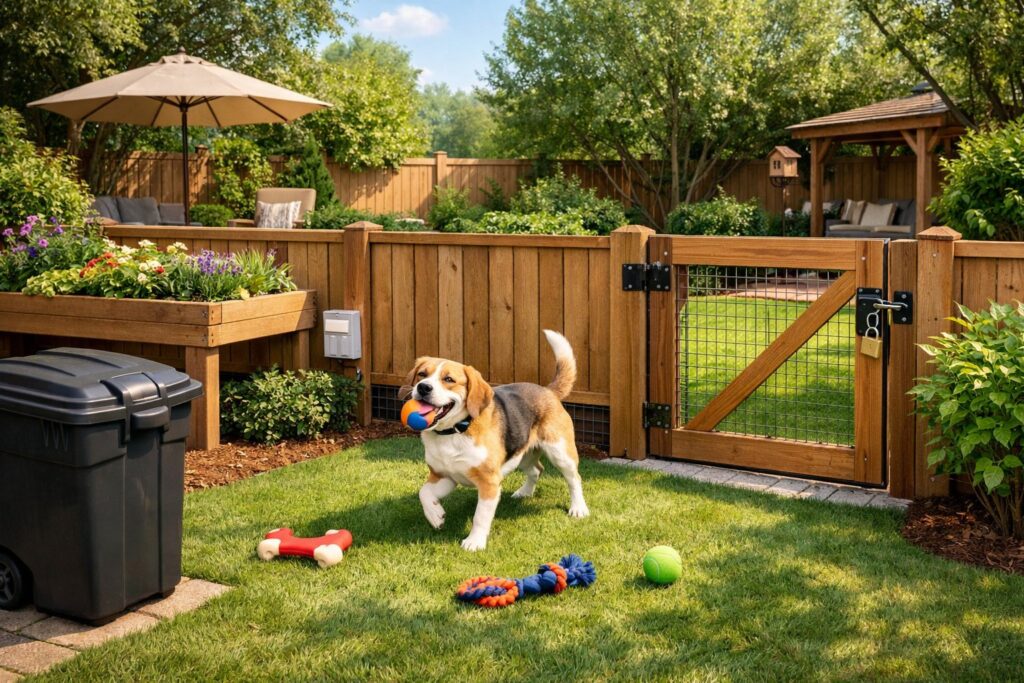
Your backyard needs real boundaries, hazard removal, and some designated spaces if you want your dog to be safe while exploring. Installing secure barriers and clearing out toxic materials makes it so your pup can enjoy outdoor time without you having to hover constantly.
Securing Yards and Fencing
We need to put up fencing that’s tall enough to prevent jumping, and with no gaps at the bottom for squeezing through. Most dogs need at least 4 to 6 feet, but big or athletic breeds might need even more.
Check your fence for weak spots, loose boards, or holes that need fixing. Dogs can escape through shockingly small openings, so walk the perimeter and patch up anything you find.
The fence material makes a difference too. Chain-link works for most, but if you’ve got a digger, you might need buried barriers or concrete footers along the bottom.
Properly securing your perimeter keeps dogs in and wildlife out. It’s worth the extra effort.
All gates should have self-closing latches that dogs can’t open. Double-check that gates swing freely and actually lock every time.
Removing Outdoor Toxins and Hazards
A lot of yard plants are toxic—azaleas, lilies, sago palms, foxglove, just to name a few. We need to identify and get rid of these before bringing a dog home.
Fertilizers, pesticides, and insecticides are loaded with chemicals that can harm dogs if eaten or absorbed through their paws. Keep your dog away from treated areas until everything’s dried or absorbed.
Honestly, switching to pet-safe lawn care is just easier in the long run. Pool chemicals, antifreeze, and rodent poison are deadly even in small amounts—store them in locked sheds or way up high.
Sharp tools, nails, and garden equipment should be organized in a secure spot. Also, get rid of any standing water like buckets or birdbaths—mosquitoes love those, and they carry nasty stuff.
Setting Up Safe Play and Potty Areas
Pick a specific part of the yard for bathroom breaks—it makes house training way simpler. Choose a spot away from busy areas and take your dog there every time.
The play area should be free of debris, sharp things, and basically anything a dog might swallow. Keep the grass short—ticks love tall grass and brush.
Shade is a must for outdoor spaces. Trees, umbrellas, shade sails—whatever works to keep things cool in hot weather.
Always provide fresh water in a sturdy bowl that won’t tip over. If you’ve got a pool, fence it off to prevent accidental falls.
We can also teach dogs where the steps are, so if they do jump in, they know how to get out safely. It only takes a few tries for most dogs to figure it out.
Using Pet Doors and Outdoor Barriers
Pet doors give dogs the freedom to move between inside and outside on their own schedule. We should pick doors with secure locks so wildlife can’t stroll right in.
Electronic pet doors work with collar sensors and only open for your dog. That’s a step up from traditional flaps that anything can push through.
A pet gate is handy for blocking off parts of the yard that aren’t fully dog-proofed yet. We use temporary barriers around gardens, construction zones, or any other sketchy spots until we finish safety upgrades.
Outdoor barriers are also great for creating separate zones if you’ve got multiple dogs who need their own space. Dog-proofing with strategic gates and panels lets us control who goes where during outdoor time.
Training, Supervision, and Ongoing Safety
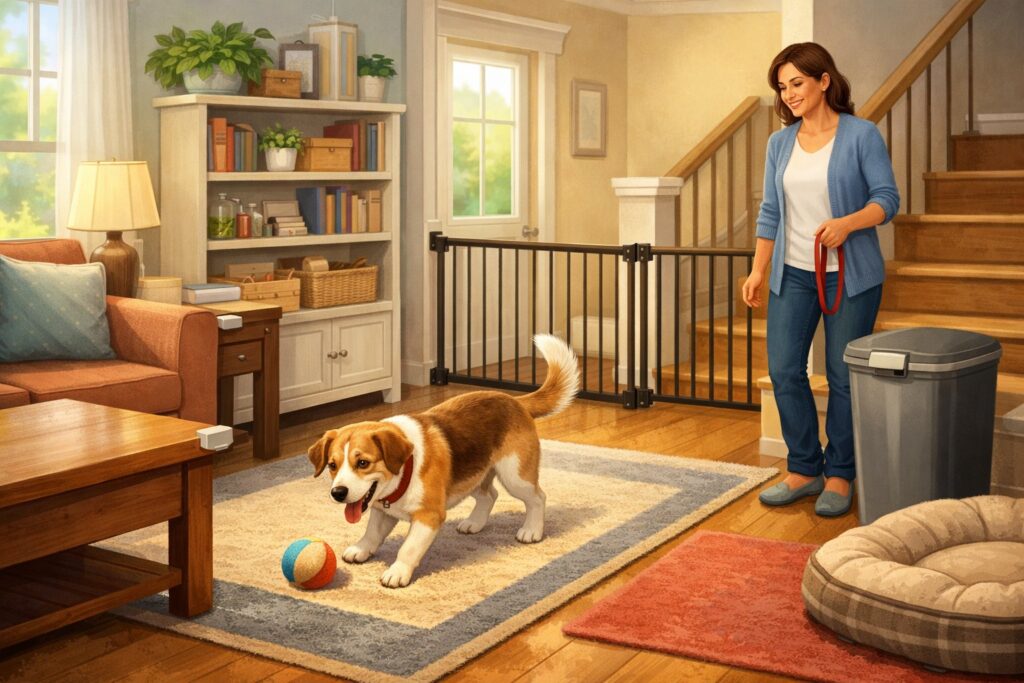
Professional training, active supervision, and regular home checks all work together to keep our dogs safe. It’s not just about avoiding accidents—it’s about staying ahead as our pets grow and their habits change.
Role of Certified Dog Trainers in Safety
A certified dog trainer can teach commands that literally save your dog’s life. Basics like “leave it,” “drop it,” and “stay” keep dogs from eating dangerous things or wandering into risky areas.
Trainers help us tackle destructive stuff—chewing furniture, cords, or whatever’s left lying around. They offer customized strategies based on your dog’s age, breed, and quirks.
Working with a pro helps us figure out why our dog does what it does, and how to redirect them safely. Crate training through professional guidance gives dogs a secure retreat and keeps them out of trouble when we’re not home.
Trainers also show us how to introduce our dogs to scary household things—like vacuums or doorbells—in a way that’s less stressful. This can cut down on anxiety-driven reactions and prevent injuries or escape attempts.
Supervising and Socializing Your Dog
We shouldn’t leave young puppies outside alone—there are just too many risks, from predators to extreme weather. Watching them during playtime lets us step in before they chew cords, swallow things, or sneak into off-limits areas.
Indoors, supervision means keeping our dogs in sight, especially in rooms with potential hazards. Baby gates can limit access but still let us keep an eye on them.
If we can’t watch our dogs, confining them to a safe room or crate is the way to go. Socialization is just as important—slowly introducing dogs to new situations, sounds, and visitors helps prevent fear-based behaviors.
Proper socialization means our dogs are less likely to bolt through open doors or freak out at normal household stuff. Go slow, watch their body language, and give them time to adjust.
Regular Safety Inspections and Adaptations
We really ought to walk through our homes every month or so, just to check for new hazards. That means testing if cabinet locks still latch, making sure cords are tucked away, and double-checking that toxic plants stay out of reach.
As our dogs grow, their abilities shift in ways we might not expect. A puppy that couldn’t even sniff the counter at three months might be snacking up there at six.
So, we have to adjust barriers and move things higher as needed. It’s a moving target, honestly.
Seasonal changes? They bring their own risks, too. For example, after treating the yard with fertilizers or pesticides, it’s best to keep dogs away for a while.
Hot weather means we should make sure there’s always shade and water. And after cleaning, dogs shouldn’t be allowed back until everything’s dry—no shortcuts there.
Wear and tear on safety equipment sneaks up faster than you’d think. Damaged baby gates need replacing, loose fence boards should be fixed, and trash can lids have to snap shut, not just rest there.
If your dog keeps poking around the same spots, that’s a clue—maybe we need stronger deterrents in those areas. Sometimes, our dogs are better at finding weaknesses than we are at fixing them.