A good aquarium water changer turns a 30-minute wrestling match into a quick weekly task. For most home aquarists, a faucet-connected system like the Python No Spill Clean and Fill is the easiest upgrade for tanks over 30 gallons, because it drains and refills through one hose without a single bucket trip. Smaller tanks and tight budgets still do fine with a manual siphon and a bucket.
Picking the right one comes down to tank size, how far your setup sits from a sink, and how much spilled water you’re willing to mop up. We’ll walk through the gear options, how the top brands stack up, and the technique that keeps fish calm during every change.
Skipping water changes or doing them poorly is one of the fastest ways to stress fish and trigger algae problems. Pairing the right tool with a steady schedule, and a good water conditioner to treat the new water, keeps your tank stable without turning maintenance into a dreaded chore.
Aquarium Water Changer – At A Glance
Which Water-Changing Setup Fits Your Tank?
A manual siphon suits tanks under 30 gallons, while a faucet-connected or powered water changer saves real time and effort on anything larger. Tank size and distance from a sink are the two biggest factors in this decision, followed by how much physical bending and lifting you want to deal with each week.
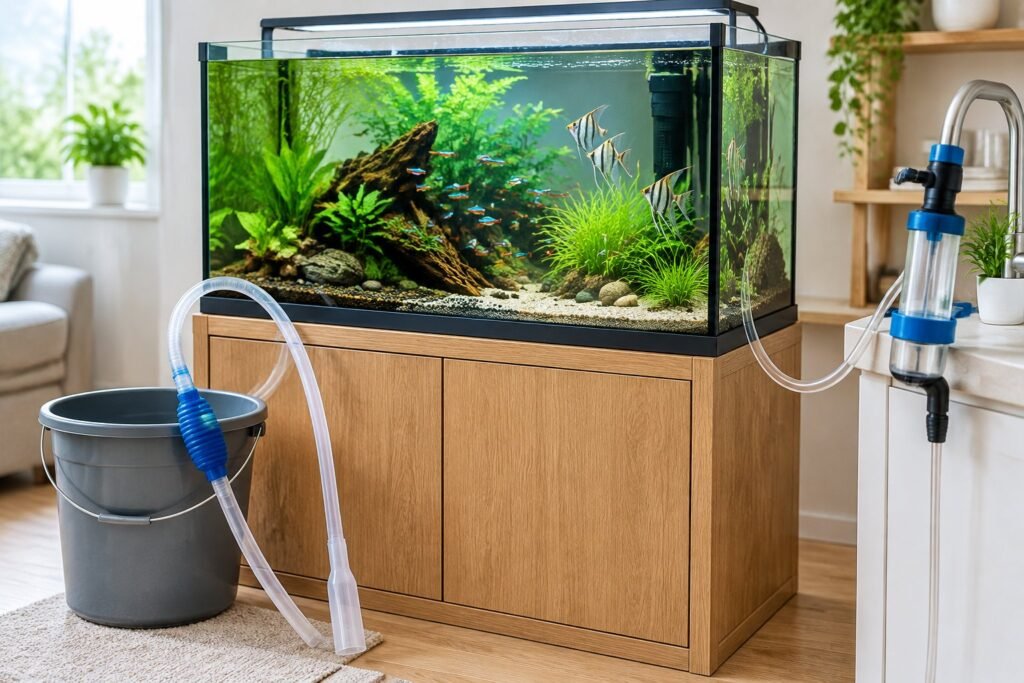
Manual Siphons and Buckets for Small Tanks
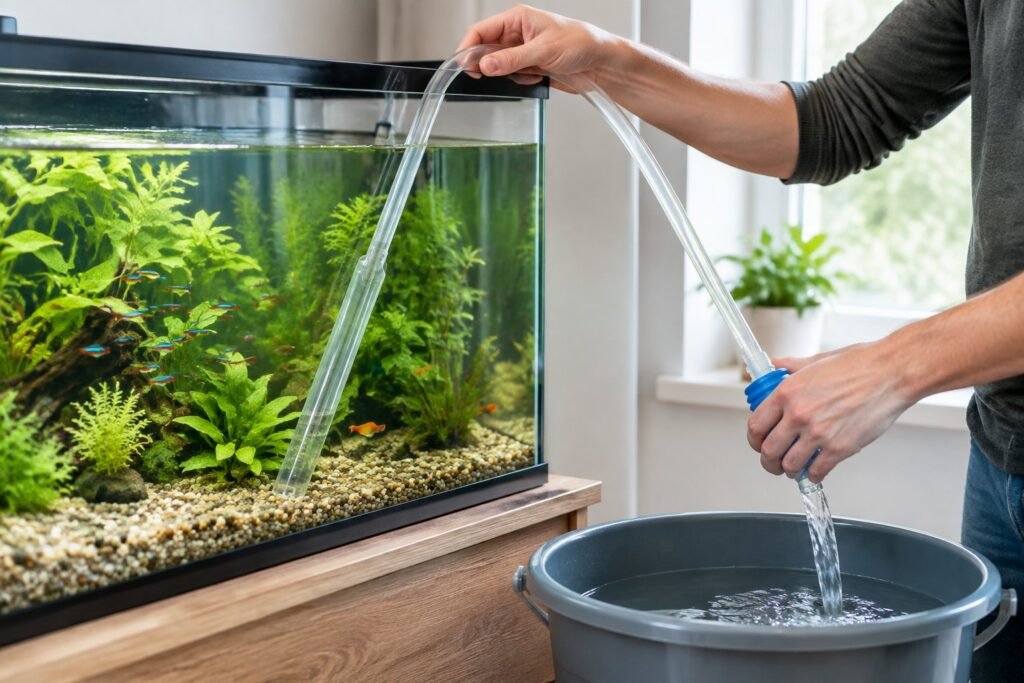
A basic gravel vac and a dedicated bucket handle nano and small community tanks well. The setup costs little, requires no plumbing knowledge, and gives you full control over suction near delicate plants or shrimp.
The tradeoff is physical effort. Carrying full buckets gets old fast once your tank passes the 20 to 30-gallon mark, and refilling by hand means hauling water back the other direction too.
Faucet-Connected Kits for Medium and Large Tanks
These kits use a long hose and a faucet adapter to drain tank water straight down the sink, then reverse flow to refill directly from the tap. There’s no bucket to carry at any point in the process.
They work best when your tank sits within hose-reach of a sink, usually 25 to 100 feet depending on the kit. Setup takes a few minutes the first time and gets faster with practice.
Powered Pumps and Automatic Systems for Longer Runs
A submersible or inline pump moves water through a hose to a drain or outdoor spot, which helps when your tank is far from any faucet. Some aquarists build continuous drip systems that exchange a small percentage of water daily instead of doing one large weekly change.
These setups take more time to install and need periodic checks on hoses and fittings. For tanks in a basement, garage, or room without plumbing nearby, a pump is often the only practical option.
How Is a Water Changer Different from a Gravel Vacuum?
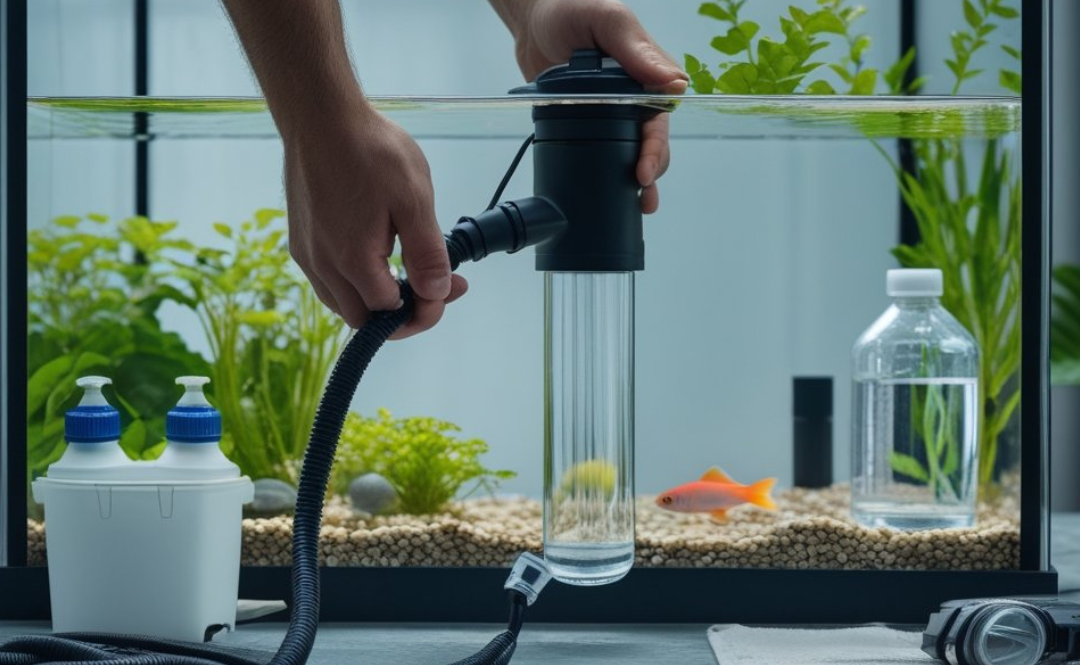
A water changer handles removing and replacing tank water, while a gravel vacuum or gravel vac focuses on lifting waste out of the substrate. Many kits combine both jobs into one tube, using a wide gravel tube attachment that stirs debris into the draining water.
A standalone siphon pump without a gravel attachment just moves water, which works fine for bare-bottom tanks or quick top-off changes. If your substrate traps a lot of waste, pick a kit that includes a proper gravel-cleaning head, not just a plain hose.
How Do Popular Water-Changing Kits Compare?
Faucet-connected kits dominate the mid-size and large tank market, while a few brands specialize in either budget setups or oversized systems. Here’s how the most recognized names stack up on hose length, flow control, and the tank sizes they fit best.
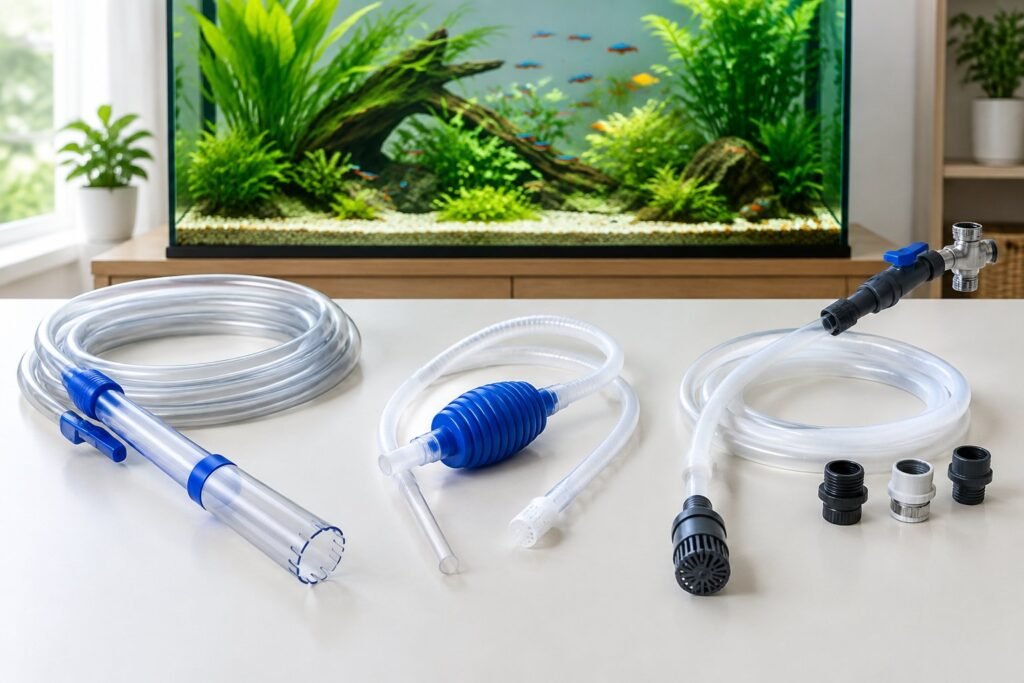
| Feature | Python No Spill Clean and Fill (ad) | Aqueon Water Changer (ad) | Marina Aqua Vac (ad) | Deep Blue Hydromaxx (ad) |
|---|---|---|---|---|
| Hose length | Up to 100 ft | 25 to 50 ft | 8 to 25 ft | Long-run, large-tank focus |
| Flow control valve | Yes | Yes | No | Basic |
| Best tank size | Medium to large | General use | Small aquariums | 100+ gallon systems |
| Gravel vacuum head | Yes | Yes | Yes | Yes |
Python No Spill Clean and Fill and Aqueon Kits
The python water changer (ad), officially the Python No Spill Clean and Fill, is the most widely used faucet-connected system among hobbyists. It attaches to a standard faucet adapter, drains tank water through gravity and water pressure, and reverses to refill without disconnecting anything.
Aqueon‘s version works on the same principle with a comparable flow control valve. Both brands suit general-purpose use across a wide range of tank sizes, and setup typically takes under five minutes once the adapter is installed.
Marina Aqua Vac and Deep Blue Hydromaxx
The Marina Aqua Vac is built for small aquariums, with shorter hose options around 8 to 25 feet and a simpler design that skips a flow control valve. It’s a reasonable pick for a single small tank kept near a sink.
Deep Blue Hydromaxx targets the opposite end of the spectrum: aquarists running 100-gallon-plus systems who need strong suction and durable tubing. It handles deep gravel beds well but offers less refined flow control than Python or Aqueon.
When a Powered Transfer System Is the Better Fit
A powered pump system beats any faucet-connected kit when your tank sits far from plumbing. Submersible or inline pumps push water through a hose to a drain, sink, or garden, which matters for tanks in basements, offices, or fish rooms without a sink nearby.
Pumps also suit aquarists running multiple tanks, since one unit can service several setups with a longer hose run. The added complexity of wiring and hose routing is worth it once bucket trips become impractical.
How Do You Change Water Without Stressing Fish?
Fish stay calm during an aquarium water change when suction stays gentle, new water matches tank temperature, and the whole process avoids sudden swings in water chemistry. Rushing any one of these steps is usually what causes gasping, hiding, or clamped fins afterward.
Drain Water and Control Suction Around Fish
Keep the gravel tube moving steadily through the substrate instead of holding it in one spot, which prevents strong suction from pulling in small fish or shrimp. Clean a third to half of the substrate per session and rotate which section you cover each week.
Stripping the entire gravel bed at once can disturb the beneficial bacteria living there, which supports your tank’s fish health over the long run. A slow, section-by-section pass does the job without the risk.
Prepare and Add Replacement Water Safely
Match new water to tank temperature within a degree or two using a thermometer, since a bigger swing can shock fish. Treat tap water with a dechlorinator before it touches the tank, as chlorine and chloramine are toxic to both fish and the bacteria in your filter.
Pour the treated water in slowly, down the glass or over a decoration, instead of directly onto substrate or fish. This avoids stirring up debris you just cleaned out.
Prevent Leaks, Backflow, and Overflow
Check hose connections and faucet adapters before every use, since a loose fitting can flood a floor fast. Always keep an eye on the water level while draining, and never walk away from an active siphon or running pump.
Install a check valve on powered systems to stop backflow, and keep the drain hose securely anchored so it can’t slip out of the sink mid-cycle.
What Should You Check Before Buying?
The right water changer fits your faucet, reaches your tank, and gives you enough flow control to avoid spills. A few practical checks before buying save returns and frustration later.
Hose Reach and Faucet Compatibility
Measure the distance from your nearest sink to your tank before picking a hose length, and add a few extra feet for slack around furniture or doorways. Most kits include a universal faucet adapter, but some bathroom or kitchen fixtures need a different size, so check your faucet threading first.
Pull-out or touchless faucets sometimes need specific faucet adapters sold separately, so confirm compatibility with your model if it’s unusual.
Flow Control, Spill Protection, and Setup Effort
A built-in flow control valve lets you fine-tune drain and refill speed, which matters most for planted tanks or shrimp setups where gentle flow protects plants and small inhabitants. Kits without a valve work fine for sturdy community tanks but offer less precision.
Spill protection features, like a shutoff that triggers if the hose disconnects, add peace of mind during unattended refills.
Cleaning, Storage, and Replacement Parts
Rinse hoses after each use to prevent algae or mold buildup inside the tubing, and let them dry before coiling for storage. Check whether the brand sells replacement gravel tubes, valves, or adapters separately, since worn parts are common after a couple years of regular aquarium maintenance.
A kit with available replacement parts lasts longer than one you have to fully replace at the first sign of wear.
Choose the Setup You Will Use Consistently
The best aquarium water changer is the one that fits your tank size and your sink access closely enough that you actually use it every week. A manual siphon works well for small tanks kept near a water source, a faucet-connected kit like the Python No Spill Clean and Fill saves time on medium and large setups, and a powered pump solves the problem for tanks far from plumbing.
Whichever setup you choose, gentle suction, temperature-matched water, and a dechlorinator every time protect your fish and keep your tank’s biology stable. Consistency with a tool you don’t dread reaching for beats any single feature on a spec sheet.
Frequently Asked Questions
What is the best way to change water in a fish tank?
The best method drains 10 to 25% of tank water with a gravel vacuum, then refills with temperature-matched, dechlorinated water poured in slowly. A faucet-connected changer like the Python No Spill Clean and Fill speeds up this process for medium and large tanks without buckets.
Do I need a faucet-connected water changer for a small aquarium?
No, a manual siphon and a dedicated bucket handle small and nano tanks well. Faucet-connected kits start to pay off once a tank passes roughly 30 gallons or sits far enough from a sink that bucket trips become a hassle.
Will an aquarium water changer fit my faucet?
Most kits include a universal faucet adapter that fits standard kitchen and bathroom taps. Pull-out, touchless, or unusually shaped faucets sometimes need a different adapter size, so check your faucet’s threading before buying.
Can I make a DIY aquarium water changer?
Yes, a submersible or inline pump connected to flexible tubing can drain and refill a tank for under $50 in parts. This setup works well for tanks far from a sink, though it takes more setup time than a ready-made kit.
Do fish get stressed after a water change?
Fish can show temporary stress, like hiding or clamped fins, if temperature swings too much or suction is too aggressive. Matching water temperature within a couple degrees and using gentle, steady suction keeps most fish calm through the process.